

New Arrival: ‘The Best of The Best’
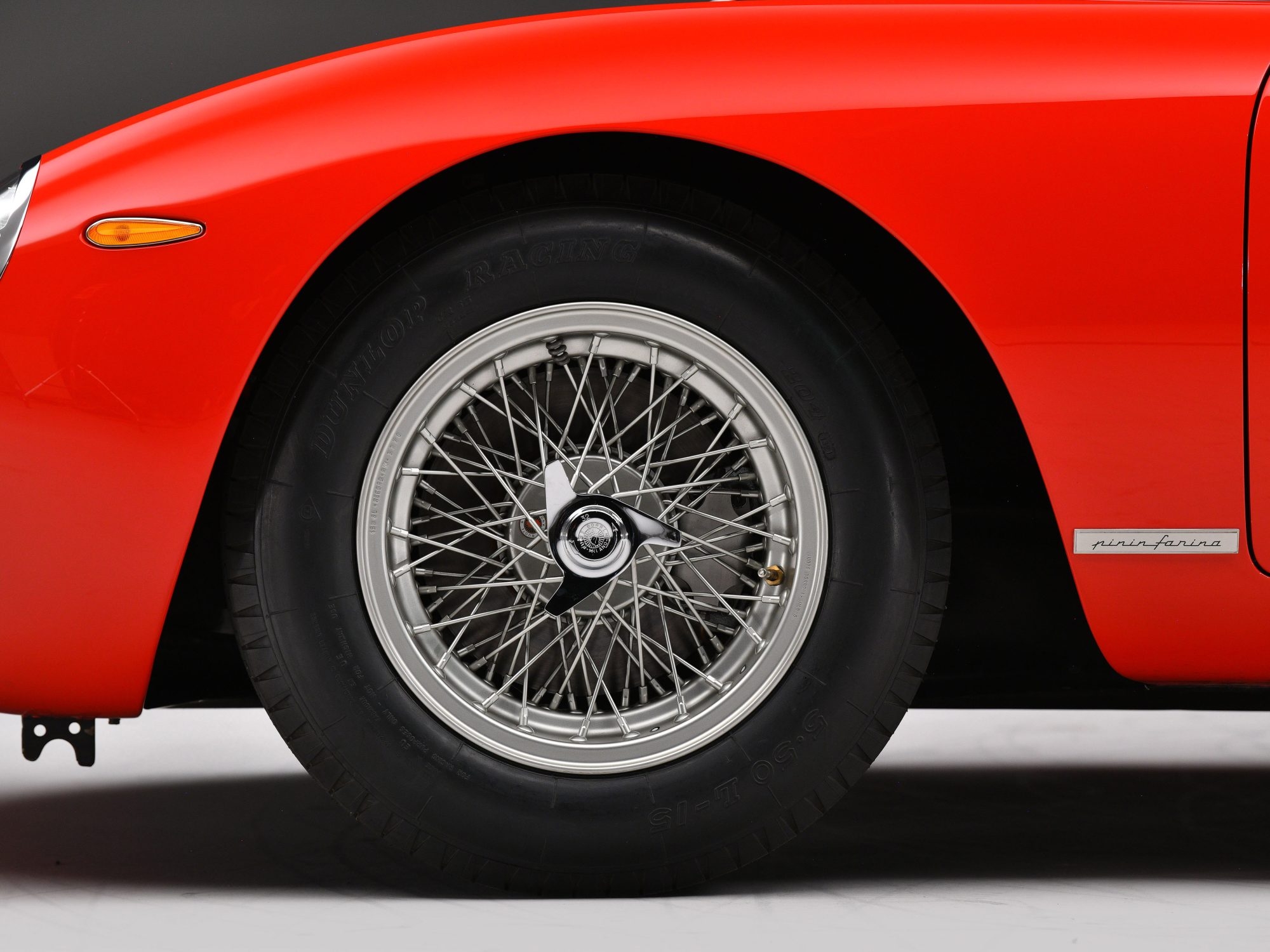
The 1960s were a period of incredible growth at Ferrari but also a time of great change. Enzo Ferrari had built a brand based on competition success, and this was achieved early in the decade with six consecutive wins at Le Mans and World Championship titles in Formula One in 1961 and 1964. He recognised the importance of promoting his road cars to fund racing, with the 250 GT series marking a new era for Ferrari. Prominent models like the 250 Mille Miglia, 250 GT Tour de France, and 250 GT SWB were immensely successful, with the Tour de France winning multiple events including the 1956 Tour de France Automobile and the 1957 Targa Florio.
In 1961, internal tensions led to the walkout of eight senior staff including Bizzarrini, who had been developing the 250 GTO. Enzo Ferrari responded by appointing young engineer Mauro Forghieri, who would prove instrumental in future successes. Ferrari began shifting to mid-engine designs with the Dino 246 SP and the ‘Sharknose’ 156 F1, winning the Constructors’ and Drivers’ titles in 1961. Forghieri, inspired by the Dino, created the 250 P for 1963, using the powerful Colombo 3.0-litre V12. The 250 P achieved instant success, prompting Ferrari to evolve it into a closed coupé—the 250 Le Mans Berlinetta.
Unveiled in Paris in October 1963, the first 250 LM had a 3.0-litre V12, though production models used a 3.3-litre engine. Built on a 2,400 mm chassis with aluminium bodies by Scaglietti and designed by Pininfarina, the 250 LM featured a stronger chassis and advanced engineering, but failed to gain FIA GT homologation. The FIA rejected Ferrari’s claim it was part of the existing 250 line, restricting the model to the Prototype class. Though the Italian Automobile Club helped, full FIA homologation only came in 1966 for the Sports class.
In 1961, internal tensions led to the walkout of eight senior staff including Bizzarrini, who had been developing the 250 GTO. Enzo Ferrari responded by appointing young engineer Mauro Forghieri, who would prove instrumental in future successes. Ferrari began shifting to mid-engine designs with the Dino 246 SP and the ‘Sharknose’ 156 F1, winning the Constructors’ and Drivers’ titles in 1961. Forghieri, inspired by the Dino, created the 250 P for 1963, using the powerful Colombo 3.0-litre V12. The 250 P achieved instant success, prompting Ferrari to evolve it into a closed coupé—the 250 Le Mans Berlinetta.
Unveiled in Paris in October 1963, the first 250 LM had a 3.0-litre V12, though production models used a 3.3-litre engine. Built on a 2,400 mm chassis with aluminium bodies by Scaglietti and designed by Pininfarina, the 250 LM featured a stronger chassis and advanced engineering, but failed to gain FIA GT homologation. The FIA rejected Ferrari’s claim it was part of the existing 250 line, restricting the model to the Prototype class. Though the Italian Automobile Club helped, full FIA homologation only came in 1966 for the Sports class.
2025-07-09
New Arrival: ‘The Best of The Best’
New Arrival: ‘The Best of The Best’
2025-07-11
The Mansour Ojjeh Collection
The Mansour Ojjeh Collection

G/F., Hang Tak Building, 1 Electric Street, Wanchai, Hong Kong
Copyright 2026. Kingsway Group Holdings Ltd. All rights reserved.